Consoles Shouldn’t Drink in Drive Time

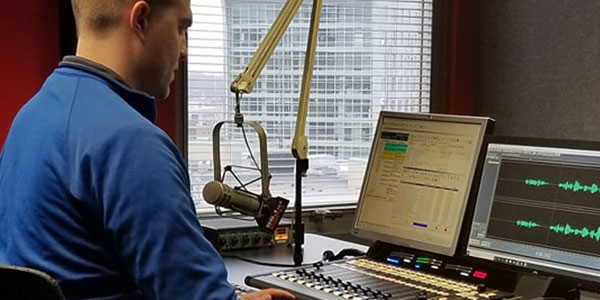
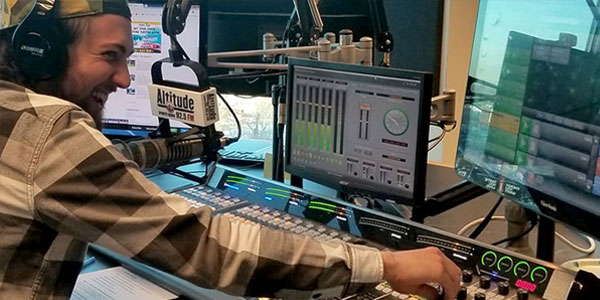
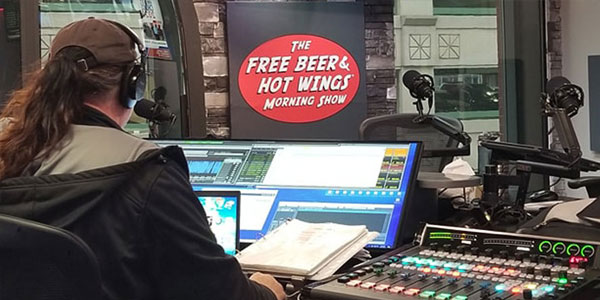
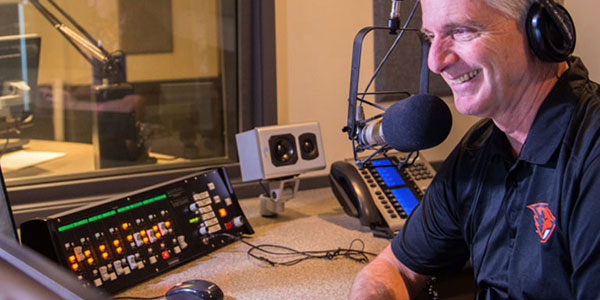
No matter how careful we are, no matter how much we threaten grave consequences, and no matter how stringent the rules, eventually it’s going to happen. At WIYY-FM (Rock 98, Baltimore, MD), it happened at about 6 AM on Friday, May 4. During the station’s unruly morning show, one of the hosts slipped the console a Mickey.

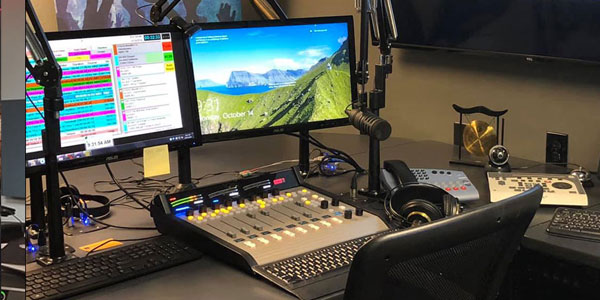
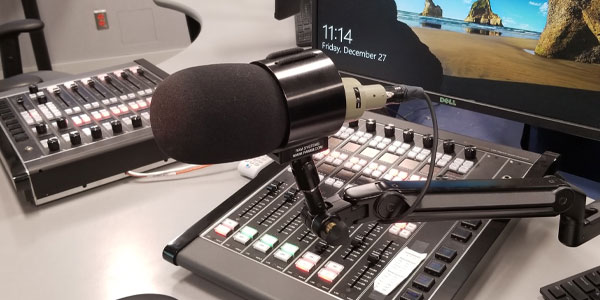
No, really. The jock’s name is Mickey Cucchiella, part of the morning team of Mickey, Amelia & Spiegel, and he managed to spill a fairly large quantity of coffee directly into the station’s Wheatstone A-6000 console. Listeners heard it happen live on the air as a loud “clink” marked the impact of the coffee mug on the console surface. (Audio here.) (Also here.)

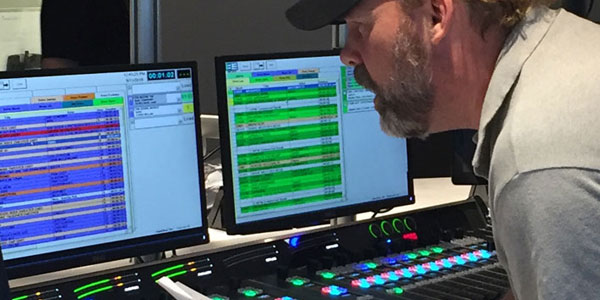
The effects were immediate and dramatic. The audio began to crackle as the engineers were called in. Broadcast technician Bryan Harz and Director of Engineering Jeff Halapin were first on the scene and looked the situation over grimly. The team speculated aloud about what would happen next, and they didn’t have to wonder for long. Just as preparations were being made to move to an alternate control room, smoke began to pour from the console and everyone became audibly uneasy about having a fire in the studio. Then there were loud buzzing sounds, and then silence. Twenty minutes of it. The broadcast resumed via an Audioarts D-75 console in a production room.

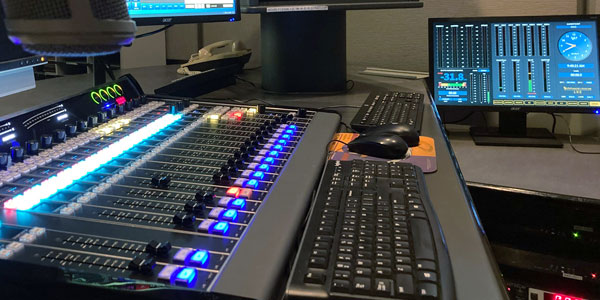
Mickey’s contrition was heartfelt and genuine, but as the other members of the morning team did their best to reassure him, Chief Engineer Kerry Plackmeyer, joining the other two engineers, had to assess the damage. They powered down the console and disassembled it to discover that there had indeed been a fire. The coffee, heavily laden with sugar and therefore highly conductive, had shorted out a main power supply bus on the motherboard. This produced tremendous heat and actually fried the motherboard. Once dried, the sugar actually ignited, causing yet more damage. (Photos, via the Rock 98 Facebook page.)

Two of the three motherboard sections were destroyed, and six modules were soaked with coffee. To Plackmeyer, it looked bad. “We actually called Wheatstone with every expectation of having to purchase a new console — quickly.”

Luckily, due to a similar but less incendiary incident a few years earlier, Plackmeyer had a spare for one of the two motherboards, and Wheatstone support engineer Jerry Jacobson quickly made arrangements to prepare and ship a second one from the factory for Saturday delivery. The earlier incident had also left WIYY with six spare console modules, allowing the six soaked ones to be replaced immediately.

The engineering crew worked quickly to clean up the mess and prepare the console for reassembly. The parts arrived just before noon on Saturday, and the console was back in operation by 2:00 PM that same day — a time frame that Plackmeyer called “miraculous.” However, it’s not at all unusual for Wheatstone to stock parts for consoles even older than this one, which is of 1995 vintage.

Plackmeyer has released a short video that shows the damage to the console. “There will never be food or drink in this room again,” he says at the end, in a tone that does not brook argument.


Making the Most of a Processor Demo

Mike Erickson

Because of the nature of processing and how installing a new processor can be an exciting time for engineering, programming and on air staff, the temptation to dig right in to your new audio processor and just “slap it on the air” is very great. If all is well, this can be a quick and easy thing to do.

Sometimes the purchase of a new audio processor happens when the old box fades to silence. In this case, the new processor is usually based on much better technology than the old one, so getting it up, running AND sounding great isn’t a huge chore. More often, the purchase of a new audio processor happens during a studio or transmitter site build/rebuild or format change, which is obviously not a quiet period. Many times the processor is on demo, which means the clock is running to make a decision. Here are some pointers on how to make the most of a demo and find time to properly evaluate the audio processor under test.

Take some down time when you are not at the station to read up on the demo processor. If you have any questions about features or options, you should contact the manufacturer to clarify. Clear time in one day when you are doing the installation and setup of the processor. Set aside a few hours so you can be on the phone (if needed) with the manufacturer. Once it is set up and on the air, you will only want or need to spend 15 to 30 minutes a few times a day listening to it and making adjustments.

Speaking of that time frame, you don’t want to spend more than 15-30 minutes listening and adjusting. Longer sessions will lead to listening fatigue and adjustments you will regret later. Take a break and come back to it with fresh ears.

Monitor your station in your car and on as many different radios as possible outside the office. Get a feel for how the new processor sounds on different radios. Try to use radios that people who listen would use (alarm clock, car stereo, MP3 player, cheap boom box) as well as radios that you are familiar with.

It’s always a good idea to go over other parts of the air chain and transmission path when evaluating a new processor. More often than not, a new processor won’t mask distortion. The nice clear details in the music will come through, but so will hum, buzz, codec artifacts and headroom issues in your facility. A new processor can be a magnifier for problems in your studios and with your source material.

The decision to buy a new processor is one you and your station will have to live with for the next decade. Make the most out of your processing “test drive.”


Radio’s Emotional Connection

Fred Jacobs

Fred Jacobs

The results of Jacobs Media’s TechSurvey8 are out, and the results are somewhat surprising. “The data from Techsurvey8 strongly suggest that focusing on connecting emotionally and meaningfully with listeners is radio’s best avenue toward remaining relevant and vibrant in the face of new digital competition,” remarks Jacobs Media president Fred Jacobs.

AM and FM radio still prove very important in the media usage pyramid (see graphic). Favorite songs and local personalities are the highest-ranking reasons for listeners to tune in, but Jacobs cites the value of having a radio on at work, radio’s way of improving listeners’ moods, a feeling of companionship, and an escape from life’s pressures as some of radio’s “emotional triggers.”

Other interesting results include Pandora’s overwhelming popularity as the top pure-play Internet radio option, used by nearly half of those who listen to streaming radio. Pandora’s mobile application is also the most popular of its kind. In second place among “streamies” is Clear Channel’s iHeartRadio, used by nearly 20% of those who listen to streams.

In the car, the battle is apparently on. Nearly half of respondents said that they’re able to connect a smartphone or MP3/stream player in their main vehicle. With more than half of all respondents indicating that most of their radio listening takes place in cars, one in ten now drives a car with a connected entertainment system such as Ford’s “Sync” system.

The study gathered information relating to 170 radio stations in 12 formats, and involved over 57,000 radio listeners, and Jacobs calls it the lartest radio tech survey ever conducted. You can read more about the survey at Jacobs’ web site.


Murrow Name Restored to VOA Site B

On May 2, 2012, in a move that warmed the hearts of broadcast historians and journalists alike, the International Broadcasting Bureau  rededicated the transmitting facilities of the Voice of America in Greenville, North Carolina as “The Edward R. Murrow Transmitting Station.” Murrow, known as the “Father of Broadcast Journalism,” was director of the United States Broadcasting Agency (the IBB’s predecessor agency) in 1962, when the facility was originally built.

Casey Murrow, son of Edward R., spoke at the event, along with IBB director Richard Lobo. The station was dedicated in Murrow’s name once before, in 1965, but for vague “security reasons” the name was dropped after the the September 11, 2001 attacks.

Coming at a time when shortwave broadcasting’s future is uncertain, and in the wake of serious debate over closing the Greenville facility entirely, the rededication came as a breath of fresh air for those who support the continuation of this vital communications resource.  “The rededication of the VOA Greenville, N.C. transmitting facility in honor of pioneering radio and television journalist Edward R. Murrow would seem to affirm the commitment of the Broadcasting Board of Governors to continue shortwave radio broadcasting,” said Tim Shamble, president of the American Federation of Government Employees Local 1812, the union which represents employees at VOA Greenville.

The transmitting station, also known as “Site B,” redefines the word, “Big.” Located just an hour or so north of Wheatstone’s factory, the site boasts eight high-power transmitters and dozens of vertical, rhombic, and curtain antennas. The property is fully two miles across, with the transmitter building and RF switching system at the approximate center of its 2,715 acres. A twin to this plant, “Site A,” still exists on the other side of Greenville, but is deactivated and in mothball status. According to Macon Dail, Chief Engineer at Site B, Site A’s eight transmitters and other vital equipment are being slowly cannibalized to keep Site B in operation.


Internet Radio Gaining Traction

A recent study conducted by Parks Associates and commissioned by Internet advertising company TargetSpot presents evidence that a growing number of people in the US are listening to Internet radio.

Overall, the study shows that 40% of adult households in the US that are broadband-connected are listening; that represents an 8% increase from the 2011 figures. The study also shows that 80% of these households listen 1-3 hours per day, and 40% listen for 1-2 hours per session.

Interestingly, while more people are listening to online radio, they’re not wild about paying for it. 86% of Internet radio listeners do not pay a fee for access to premium content — they are, by default, opting into advertising. This is great news for companies like TargetSpot.

“Internet Radio has a highly desirable audience that recalls and responds to advertising, making Digital Audio advertising a must buy for brands,” observes Eyal Goldwerger, TargetSpot’s CEO. TargetSpot’s primary business is the placement of advertising messages with online radio providers.

Mobile, connected devices such as smartphones are making an impact on these numbers by easing access to the internet without the need to be near a computer. One interesting fact of note is that more than half of those who have Internet radio access in their cars are receiving it via a built-in facility in their car audio systems, while only 15% plug their smartphones or tablets into their cars’ auxiliary jacks.

“It’s  clear  from  this  benchmarking  study  that  Digital  Audio  is  a  firmly  established  medium  and  one  that  is   continuing to grow at a rapid rate,” continues Goldwerger. “The proliferation of devices and subsequent access to Digital Audio content will only further accelerate adoption.”


Links from WHEAT:NEWS Volume 3, No. 8

WHEAT:NEWS

WHEAT:NEWS, Wheatstone’s twice-monthly newsletter, publishes a list of links of general interest in each issue. If you don’t receive WHEAT:NEWS and would like to, simply click the banner above and you’ll be led to a page where you can subscribe. We don’t sell or give away your contact info and we don’t SPAM, and we make it easy to unsubscribe at any time.

Volume 3, No. 8 published the following links:

  • Attendance at NAB 2012 was up very slightly from last year’s figures. Here are the final numbers.
  • According to the NAB, 80% of Americans who own a cell phone would pay a small, one-time fee to access their favorite local FM radio stations on their phone. Here’s the full story from NAB.
  • Do you have a “Social Media Will?” The U.S. Government recommends it, as well as the appointment of an online executor. Read more at the New York Daily News.
  • In case you were wondering if it might be possible to convert your iPad into an Etch-A-Sketch: Yep, there’s an app for that (and a fully functional case, too.) Engadget has the story, photos, and video.
  • Remember when aesthetic style was an important part of transmitter design? I do, and so does Paul Thurst, author of the Engineering Radio blog.
  • Most of the time, we’re lamenting the lack of Wi-Fi signal. In some instances, though, it might be preferable to block it! For that, you’ll need some anti-Wi-Fi wallpaper! (IT Pro Portal)

Four Awards for Wheatstone!

NAB 2012 was a great success for Wheatstone, and we’d like to thank those of you who came to see us at our booth this year. Our new products were very well received, and by the end of the show, we’d garnered no less than four awards! We received the Broadcast Engineering Excellence Award, TV Technology’s STAR Award, Radio magazine’s Pick Hit Award, and Radio World’s Cool Stuff Award.

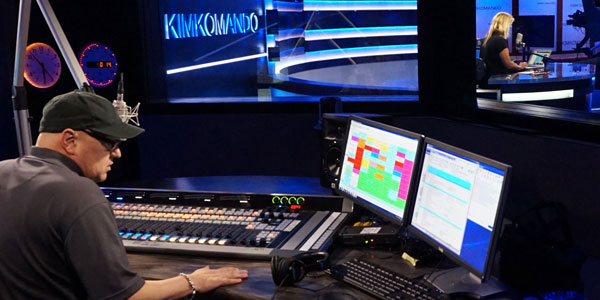
Broadcast Engineering presented its Excellence Award to KOMO-DT’s facility in Seattle, Washington, which was submitted by Wheatstone Corporation late last year. The first place award in the “New Facility – HD” category was presented by managing editor Susan Anderson, and accepted by KOMO’s Lee Wood and Fisher Communications Executive VP Rob Dunlop, along with Wheatstone Sales Engineer Brad Harrison. KOMO’s facility includes Wheatstone’s Dimension One TV audio console and BRIDGE router.

TV Technology magazine presented us with the STAR (Superior Technology Award Recipient) award for our SideBoard Rack compact rack-mounted control surface. The SideBoard Rack is a rack-mountable version of our popular SideBoard, which is designed to control the built-in utility mixer in every WheatNet-IP BLADE. TV Technology Editor Tom Butts presented the award to Wheatstone’s Gary Snow on Tuesday at the Wheatstone booth.

Wheatstone’s all-new LX-24 control surface received two awards at this year’s show. Radio magazine editor Chriss Scherer presented the coveted Pick Hit award on Wednesday afternoon, and Radio World editor Paul McLane presented us with the sought-after Cool Stuff award on Thursday morning. Both awards are judged by a panel of industry experts who evaluate the products at the show itself. “We’re very proud of the LX-24 and the team that made it a reality, and we’re very much gratified that the industry has recognized it as well,” said Andy Calvanese, VP Engineering at Wheatstone.

All of us at Wheatstone are focused on producing the very finest audio consoles, audio routing and distribution equipment, and audio processing gear, and bringing them to the industry at fair prices and with dedicated customer support. These awards tell us that we’re doing good work, so from all of us here in New Bern, thank you!


NAB 2012: A Look Back

Here’s a gallery of photographs of Wheatstone’s presence at NAB 2012. For those who weren’t able to make it to the show, this will provide a look at some of the exciting new hardware we displayed in our booth. And those who were there might want to look closely; you might be in some of these! (You can click any of the photos for a larger version.)

NAB-01

Phil Owens demonstrates the new Wheatstone D-8EX television audio console to a pair of booth visitors.

NAB-02

Here's our new SideBoard Rack compact rack-mounted control surface, making its debut at our NAB 2012 booth.

NAB-03

Here's a shot of our booth crew, immediately prior to the show's opening. From left to right are Darrin Paley, Brad Harrison, Steve Dove, Jay Tyler, Paul Picard, Jeff Keith, Mike Erickson, Kelly Parker, and Phil Owens.

NAB-04

This console was the true star of our booth, and was turning heads all four days. This is the all-new LX-24 control surface from Wheatstone. The LCD screen shows WideOrbit's automation system, which we used for the demo.

NAB-05

The folks at Tieline Technology, Wheatstone's technology partners, have incorporated WheatNet-IP into their Genie codec. Here's their booth display, featuring one of our E-1 consoles as well.

NAB-06

Wheatstone's Mike Erickson and Kirk Lawrence of ENCO Systems pose with the WheatNet-IP gear and AirAura audio processor used at the ENCO booth. ENCO is a Wheatstone technology partner.

NAB-07

Wheatstone President Gary Snow shows the LX-24 control surface to Paul McLane, Editor-in-Chief of Radio World.

NAB-08

Wheatstone's Jay Tyler poses with some visitors from Latin America in front of the LX-24 console at the Wheatstone booth.

NAB-09

Jim Hammond, Director of Sales for Radio Automation at WideOrbit, a Wheatstone technology partner, poses with the E-1 console that was part of WideOrbit's NAB 2012 booth.

NAB-10

Josue' Rodriguez, Regional Director of Sales for Wheatstone dealer 305 Broadcast in Miami, Florida, poses with the Audioarts IP-12 console that was part of 305's booth this year.


A Sonic Screwdriver and Sonotweezers

Once thought of as so completely unlikely as to be invented as a fictional device for the Doctor Who television series, the sonic screwdriver (or something quite like one) is now a reality, if only in the laboratory.

Researchers at the University of Dundee in Scotland have managed to lift and rotate a disc-shaped piece of rubber weighing 90 grams using only a beam of ultrasonic waves.

The experiment, intended to prove the theory that the ratio of angular momentum to energy in a vortex beam is equal to the ratio of the number of intertwined helices to the frequency of the beam, was technically successful as well. “For the first time, our experimental results confirm directly the validity of this fundamental theory,” says Dr. Christine Demore. Scientists had previously been able to only indirectly confirm the theory, as it was not possible to simultaneously measure the angular momentum and power of the beam.

Research being conducted at IMSaT (The Institute for Medical Science and Technology) goes much further than simply confirming a physics theory, however. These new techniques for control of an ultrasound beam “can also be applied to non-invasive ultrasound surgery, targeted drug delivery, and ultrasonic manipulation of cells,” says Dr. Mike MacDonald of IMSaT. Part of a larger project called “Sonotweezers” with active working groups at the Universities of Glasgow, Southampton, and Bristol, the combined research is intended to turn ultrasonic beams into the tools of the future. Applications could stretch from medicine into physics and engineering as well.

For the moment, the tool is impractical for use outside the laboratory, but that will soon change. For now, an array of 1,000 ultrasonic transducers is needed to form the acoustic hologram, and it works only underwater.

“Like Dr. Who’s own device, our sonic screwdriver is capable of much more than just spinning things around,” says MacDonald.


Space Weather

Aurora borealis over Glacier National Park, Montana (courtesy of Kameron Barge)

The last two years have seen an expected increase in solar activity as we move into sunspot cycle 24, and the trend shows no signs of slowing. In fact, since April 23, an unusually high level of solar wind has lashed at the Earth’s magnetic field, causing spectacular auroral activity visible as far south as Kansas and Colorado in the United States! In Anchorage, Alaska, where the horizon still glows with sunlight even at midnight this time of year, the aurora was still brilliantly visible on the evening of April 24.

The Sun’s corona has been very active, sending several large coronal mass ejections (CMEs) toward Earth in recent months. A small CME is even arriving as I write this, and will result in geomagnetic disturbances until sometime on Saturday. If you’re far enough north and blessed with clear skies, tonight would be a great time to keep an eye on the skies, as the CME’s arrival will likely further increase the chance of a spectacular display.

Coronal mass ejections are known for more than pretty lights, of course, and in the broadcast industry, we need to be aware of the Sun’s activity because of its potential effects on signal propagation and on the power grid. Since most of us don’t possess solar observatories, how can we stay ahead of the game and know what the Sun’s about to hurl at us?

Several great apps are available for mobile devices, and one of the very best is free. “3D Sun” is provided by Dr. Tony Phillips of NASA’s heliophysics division. The app takes its data from the STEREO satellites as well as the SDO (Solar Dynamics Observatory). In addition to allowing you to view the Sun’s features at several key wavelengths, it can also provide push notifications when significant space weather events occur. The app is presently available for Android devices as well as for the iPhone and iPad.

Several web sites also provide up-to-the-minute solar information. NOAA’s Space Weather Prediction Center gives all the basic information on a single page, while SpaceWeather.com and NASA’s Solar and Heliospheric Observatory (SOHO) site provide more comprehensive information.

Our current sunspot cycle will, by most accounts, lead us to a solar maximum (period of maximum solar and sunspot activity) in the spring of 2013, and we can expect activity to steadily increase until that time. There’s never been a better time to be aware of the weather “out there!”